Baengnyeongdo Island Travel Guide: Ferry Schedules, Tips, and Top Attractions
Looking for a practical Baengnyeongdo Island Travel Guide? This guide covers everything you need to know before visiting Baengnyeongdo Island (백령도), one of South Korea’s most remote and fascinating destinations.
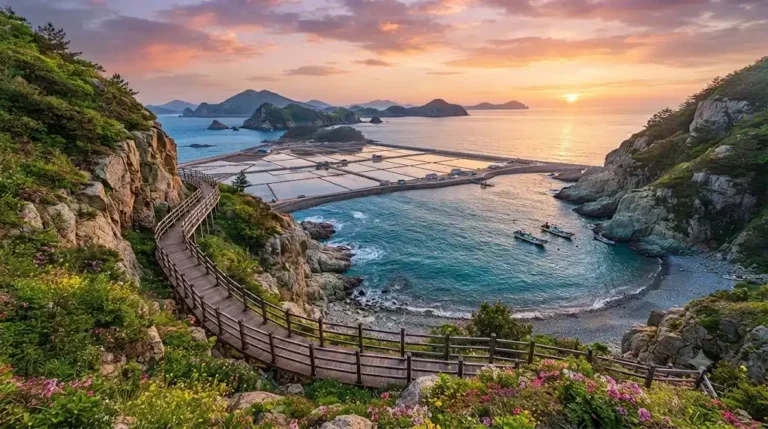
Located in the West Sea near the Northern Limit Line, Baengnyeongdo is famous for its dramatic coastline, Dumujin Cliffs, Sagot Beach, Kongdol Beach, and unique local culture.
Because ferry schedules can change with sea conditions and transportation on the island is limited, planning ahead is essential.
In this Baengnyeongdo Island Travel Guide, you will find practical information about how to get there, transportation, things to do, local food, travel restrictions, and essential tips for foreign travelers.
If you are planning your first trip to Baengnyeongdo, start here.
Table of Contents
1. Getting There & Internal Logistics: The 1-Second Mobile Roadmap
Reaching Baengnyeongdo requires departing from the Incheon Coastal Ferry Terminal. Because the West Sea is notoriously rough, your logistics must be airtight.
| Category | Details & Vessel Fleet | Pro Tips (EEAT Field Insight) |
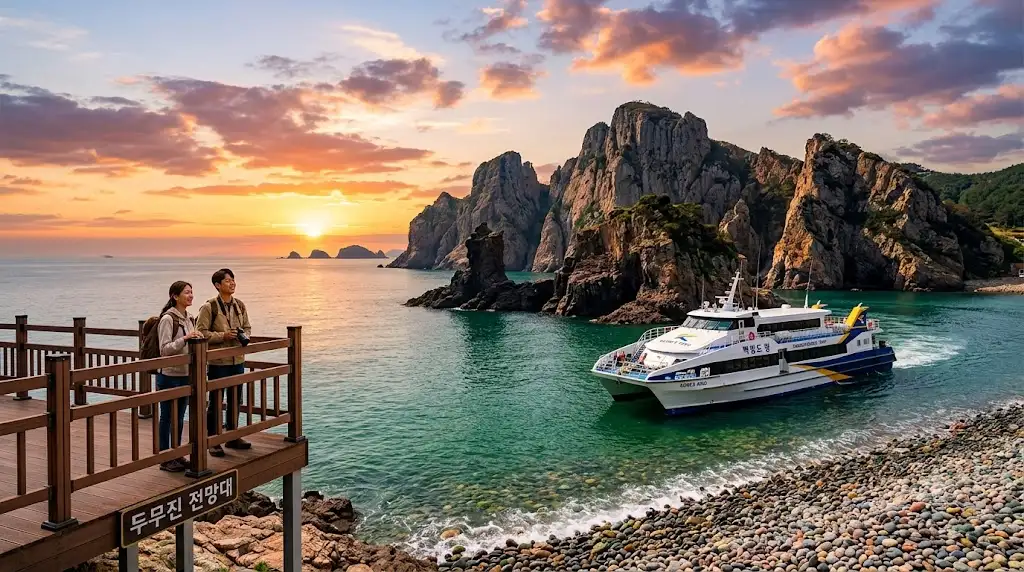
| Ferry Routes & Ships | Incheon Coastal Ferry Terminal $\leftrightarrow$ Baengnyeongdo Yonggiport. (Vessels: Korea King, Island Princess) | High-speed vessels run 2–3 times daily. The yellow ocean swells are relentless; take a strong motion sickness pill (Mulmiyak) 30 minutes before boarding, even if you think you have iron stomach. |
| Real Costs & Docs | Approx. ₩130,000–₩150,000 round-trip. Mandatory: Physical Passport. | Your passport is checked multiple times by marine port authorities. Digital copies or phone photos are strictly rejected. No passport = no boarding. |
| Internal Transport | Crucially limited. No Uber/KakaoT. Local public buses run on an infrequent 1-to-2 hour loop. | Taxis operate on a “Flat-Rate Negotiation” (Hyup-jeong) system, not meters. Expect to pay ₩20,000–₩40,000 per trip. Book a local rental car weeks ahead; walking between sites is impossible. |
| The Emergency Buffer | Never book a ferry out of Baengnyeongdo on the day before your international flight. | Maritime weather is called at 6:00 AM daily. If morning sea fog rolls in, all ships drop anchor. Always maintain a 48-hour flexible schedule buffer. |
2. Top Hidden Treasures & Dangerous Laws You Must Know
Dumujin Cliffs (The Geumgangsan of the West Sea)
These breathtaking, 50-meter-high organic silica rock formations pierce out of the ocean like ancient stone soldiers.
- The Pro Route: Do not just look from the cliffside trekking path. Go down to the small harbor and board the local excursion boat (Yuramseon). Seeing the sheer scale of these walls from the water, looking out toward North Korea’s Changsanot Point, is mind-blowing.
Sagot Beach (The Diatomite Natural Airfield)
One of only two beaches on Earth with a natural sand bed packed so tight and dense that it functions as a natural military landing strip. During the Korean War, it served as a temporary military airfield.
- The Insider Warning: While the sand feels as hard as asphalt and you can technically drive a standard sedan on it, do not drive close to the shifting tide line, or your vehicle will sink and stall.
Kongdol Pebble Beach (Bean-Sized Natural Wonders)
Instead of sand, this stunning cove is covered entirely in millions of smooth, multi-colored round pebbles shaped by millennia of wave friction. Listening to the rushing sound of waves retreating over these pebbles is incredibly therapeutic.
- ⚠️ STRICT ILLEGALITY WARNING: Do not take even a single pebble as a pocket souvenir. The entire beach is designated as South Korean Natural Monument No. 392. Marine patrols and port baggage X-ray scanners actively check for these stones. Stealing them results in heavy criminal fines.
3. Real-World Experience Warning
⚠️ Key Practical Warning (EEAT Experience):
1. The Digital Blindspot & GPS Spoofing: Because Baengnyeongdo is a heavy electronic warfare frontline zone, Google Maps is completely useless here, and even Korean apps like Naver Maps or KakaoMaps will frequently lose GPS calibration or display spoofed positions. Download offline maps beforehand.
2. The Hard Coastal Curfew: Every single beach, including tourist spots like Sagot and Kongdol, is wrapped in heavily monitored military barbed wire. At sunset, the gates are locked, and coastal entry is completely illegal. Do not loiter near the coastlines after dark; marine guards treat unauthorized night movement as a serious security breach.
3. Extreme Cash Reliance: International credit cards (Visa, Mastercard) fail at over 70% of the island’s small, grandmother-run guesthouses (Minbak) and local noodle joints. Carry at least ₩150,000 in physical cash.
4. The Authentic Local Culinary Experience
You cannot claim you have fully explored Baengnyeongdo without eating authentic Baengnyeongdo Naengmyeon (Cold Buckwheat Noodles). This is entirely distinct from the famous Pyongyang or Hamhung styles found on the mainland.
- The Original Profile: The broth is crafted from rich pork bone stock, but the secret weapon is Kkanari (Sand Lance Fish Sauce) sourced directly from the island’s pristine waters.
- How to Eat Like a Local: When the bowl arrives, taste the raw broth first. Then, add exactly 3 to 4 drops of the dark, locally-made Kkanari fish sauce provided on the table, followed by half a spoonful of local yellow mustard. The fish sauce adds a profound, savory umami depth without tasting fishy at all. Pair it with a side of Suyuk (boiled pork belly slices wrapped in sour kimchi).
5. Google-Optimized FAQ Section
Q1: Is Baengnyeongdo Island safe for foreign tourists given its proximity to North Korea?
A: Yes, absolutely. Despite the visible marine checkpoints, anti-aircraft guns, and bunkers, civilian life is incredibly peaceful and normal. The island is protected by the elite South Korean Marine Corps. As long as you respect military boundary signs and fences, it is as safe as mainland Seoul.
Q2: What happens if my ferry back to Incheon is cancelled due to fog or waves?
A: If a cancellation is announced, immediately contact your local island guesthouse host. They are highly accustomed to this and will instantly extend your room stay at standard rates. Next, call the ferry company or use your mobile booking app to secure a seat on the very first ship scheduled for the following morning, as standby lines get massive.
Q3: Can I fly drones or take panoramic landscape videos on the island?
A: Flying drones is strictly prohibited across the entire island without a pre-approved military permit, which is virtually impossible for tourists to obtain. Photographing or filming military radars, guard towers, camouflaged bunkers, or individual soldiers is a direct violation of national security laws. Keep your lenses focused exclusively on natural monuments like Dumujin.
Q4: Are there convenient facilities like Western-style hotels, modern convenience stores, and ATMs?
A: There are no luxury 5-star hotels; accommodation consists entirely of local motels or cozy guesthouses (Minbak). However, the main village center (Jinchon-ri) features fully stocked CU and GS25 convenience stores, local pharmacies, and a handful of standard domestic bank ATMs (Nonghyup/NH Bank) where you can withdraw cash using foreign-issued debit cards.
Q5: What is the single best month to visit the island?
A: September is the goldilocks month. The heavy summer monsoons and sea fogs of July and August have fully cleared out, the sea swells are calmest, and the autumn winds make trekking along the dramatic Dumujin cliffs exceptionally pleasant.
[🔗 You Might Also Like]
Yaksando Travel Guide: Discovering South Korea’s Medicinal Island Paradise
Nohwado Travel Guide: Discovering South Korea’s Premier Abalone Island
Chodo Island Travel Guide: Discover Yeosu’s Hidden Emerald Island
Seodo Island Travel Guide: Discover Yeosu’s Hidden Dinosaur & Miracle Sea Road Gem