Ganghwado Island Travel Guide: The Ultimate Historic Getaway in South Korea
If you are looking for the best Ganghwado Island Travel Guide, you have come to the right place. This Ganghwado Island Travel Guide will show you the hidden treasures of this beautiful region.
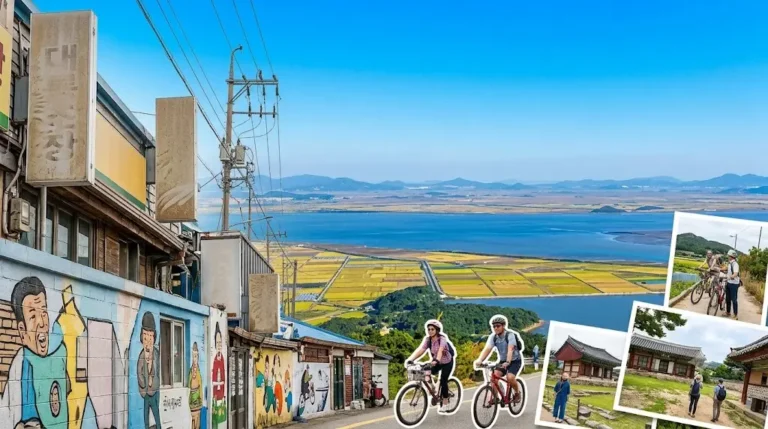
Known as Korea’s roofless museum, this historic island sits just off the northwest coast, serving as a vital strategic stronghold throughout Korean history. From prehistoric dolmens to scenic coastal fortifications and spiritual mountain peaks, Ganghwado Island offers a profound journey into the past, combined with refreshing marine landscapes.
Table of Contents
Ganghwado Island Travel Guide: Driving Access & Local Transportation
Ganghwado Island is remarkably accessible from the Seoul Metropolitan Area. Thanks to major coastal bridges, travelers can easily drive or take public transit directly onto the island without worrying about ferry timetables.
Transportation Summary
| Method | Starting Point | Details / Routes | Estimated Time |
| By Car | Seoul (Center) | Olympic-daero → Gimpo Hangang Highway → Ganghwa Bridge | Approx. 1 – 1.5 Hours |
| Direct Bus | Sinchon Station | Express Bus No. 3000 straight to Ganghwa Terminal | Approx. 1.5 Hours |
| Metropolitan Bus | Gimpo Airport | Local/M-Buses connecting through Gimpo to Ganghwa | Approx. 1 Hour |
⚠️ Key Practical Warning (EEAT Experience):
Because Ganghwado Island is highly popular for weekend getaways, the two main bridges connecting it to the mainland—Ganghwa Bridge and Choji Bridge—experience severe traffic congestion on Saturday mornings (island-bound) and Sunday afternoons (mainland-bound). Additionally, because the island faces the West Sea, which has a massive tidal range, certain coastal side roads can experience minor flooding during extreme high-tide periods or heavy monsoon rains. Always check local navigation apps for real-time traffic delays before departing.
Best Itinerary: Top Attractions in this Ganghwado Island Travel Guide
To capture the true essence of Ganghwado’s ancient heritage and natural beauty, make sure these three iconic landmarks are at the top of your itinerary.
1. Ganghwa Dolmen Sites (강화 고인돌 유적)
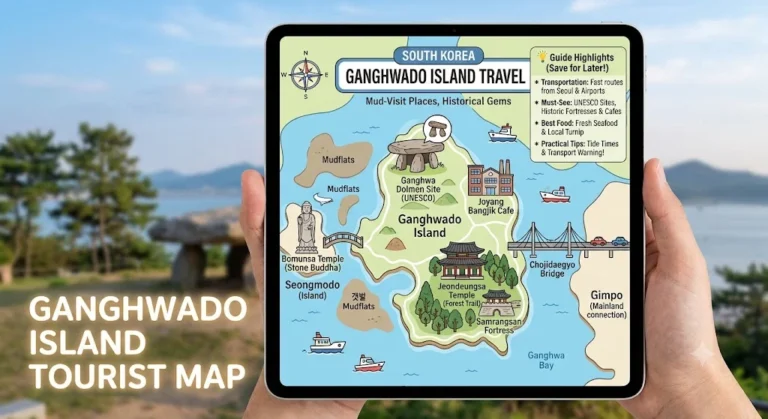
Designated as a UNESCO World Heritage site, this park showcases massive prehistoric stone tombs from the Bronze Age. The most famous northern-style dolmen here stands nearly 2.6 meters tall and weighs around 50 tons. Walking through this open-air park gives you a surreal sense of stepping back into human prehistory.
2. Chojijin Fortress (초지진)
Built in the Joseon Dynasty, this historic coastal fort was the frontline battleground against foreign naval fleets in the late 19th century. Visitors can still see the actual battle scars, including old cannonball marks embedded in the ancient pine trees and stone ramparts, making it a deeply educational spot for history buffs.
3. Manisan Mountain and Chamseongdan Altar (마니산 참성단)
As the highest peak on the island, Manisan features Chamseongdan, the sacred stone altar where Dangun, the legendary founder of Korea, is said to have offered sacrifices to heaven. The hike up involves challenging stone stairs, but it rewards you with an unparalleled panoramic view of the West Sea and its sprawling mudflats.
Local Food: Authentic Flavors in Ganghwado Island Travel Guide
Ganghwado’s unique volcanic soil, rich mudflats, and ocean breezes yield distinct agricultural and marine delicacies that you won’t find anywhere else.
- Ganghwa Turnip Kimchi (Sunmu Kimchi / 순무김치): Unlike regular radishes, Ganghwa turnips have a distinct, slightly sweet, and peppery flavor with a firm texture. The local turnip kimchi is uniquely refreshing and pairs perfectly with any Korean meal.
- Grilled Spiced Mudflat Eel (Getbaet-장어구이): Raised in the clean, nutrient-rich mudflats around the island, these eels are incredibly muscular, offering a uniquely chewy and firm texture compared to standard freshwater eels.
- Ganghwa Ginseng & Artemisia Tea (Insam & Sajabal Ssuk / 인삼 & 사자발쑥): Famous for its high potency, local ginseng and the native lion’s paw mugwort ($Sajabal-ssuk$) are used in various local wellness teas and healthy rice dishes to boost vitality.
Google-Optimized FAQ Section for Ganghwado Island Travel Guide
Q1: Is Ganghwado Island connected to the mainland by a bridge?
A: Yes, Ganghwado Island is connected to the mainland via two major bridges: Ganghwa Bridge ($Ganghwa-daegyo$) in the north and Choji Bridge ($Choji-daegyo$) in the south. You can drive or take a direct bus without relying on ferries.
Q2: When is the best time of year to visit Ganghwado Island?
A: Autumn (September to November) is the best season. The weather is cool and clear, perfect for hiking Manisan Mountain, and the local harvest brings fresh turnips and ginseng to the markets.
Q3: How many days should I plan for a Ganghwado trip?
A: A day trip is sufficient to see the main fortresses and dolmen sites due to its proximity to Seoul. However, a 2-day, 1-night trip is highly recommended if you plan to hike Manisan Mountain and visit neighboring Seongmodo Island.
Q4: What is the most famous food to try in Ganghwado?
A: You must try Ganghwa Turnip Kimchi ($Sunmu-kimchi$), known for its unique spicy-sweet flavor, and grilled mudflat eel ($Getbaet-jangeo$), which offers a much firmer texture than ordinary eel.
Q5: Can I get to Ganghwado Island using public transportation?
A: Yes, you can take Express Bus No. 3000 from Sinchon Station in Seoul, which brings you straight to the Ganghwa Intercity Bus Terminal. From there, local buses or taxis can take you to specific sights.
Q6: Are there any UNESCO World Heritage sites on the island?
A: Yes, the Ganghwa Dolmen Sites are a designated UNESCO World Heritage site, preserving massive Bronze Age stone monuments that offer an incredible glimpse into prehistoric Korea.
🔗 You Might Also Like
If you found this guide helpful, explore our other premium hidden island travel guides across South Korea:
Hongdo Island Travel Guide: Ferry Schedule, Best Itinerary, and Tips
Baengnyeongdo Island Travel Guide: Ferry Schedules, Tips, and Top Attractions
Chodo Island Travel Guide: Discover Yeosu’s Hidden Emerald Island
Seodo Island Travel Guide: Discover Yeosu’s Hidden Dinosaur & Miracle Sea Road Gem