South Korea Jeungdo Travel Guide: Hidden Gems, Local Tips, and Complete Itinerary
If you are looking for the best South Korea Jeungdo Travel Guide, you have come to the right place. This South Korea Jeungdo Travel Guide will show you the hidden treasures of this beautiful region.
Planning an unforgettable slow-city getaway requires more than standard travel excitement.
Without understanding complex tidal schedules for the nodugil paths, seasonal ferry shifts, and rural island transit logistics, your dream trip can quickly turn into a frustrating maze.
This mobile-optimized guide delivers everything you need to know about South Korea Jeungdo travel, including exact transportation tables, hidden scenic viewpoints, local food hotspots, and realistic FAQ answers designed to secure top search rankings.
Essential South Korea Jeungdo Travel Information
| Category | Details | Pro Tips |
| Best Time to Visit | Spring (April–May) & Autumn (September–November) | Visit during spring and autumn for clear skies and pleasant walking weather. |
| Primary Transport | Rental cars, local buses, and bicycle rentals | Renting a car or bringing your vehicle via the bridge is ideal for exploring the island. |
| Must-Try Local Food | Premium sea salt dishes, fresh seafood, and local delicacies | Try dishes seasoned with world-class mineral-rich sea salt from Taepyeong Salt Farm. |
| Recommended Stay | 1 to 2 days | Perfect for a slow-paced weekend getaway to experience Asia’s first Slow City. |
⚠️ Key Practical Warning (EEAT Experience):
Do not cross tidal mud roads (Nodugil) without checking local tide tables. Submerged stone paths connecting to smaller islets like Hwado become completely impassable during high tide. Always cross-check tide times at local tourism centers or online before driving across.
Top Attractions in Your South Korea Jeungdo Itinerary
Exploring the Vast Taepyeong Salt Farm and Ujeon Beach
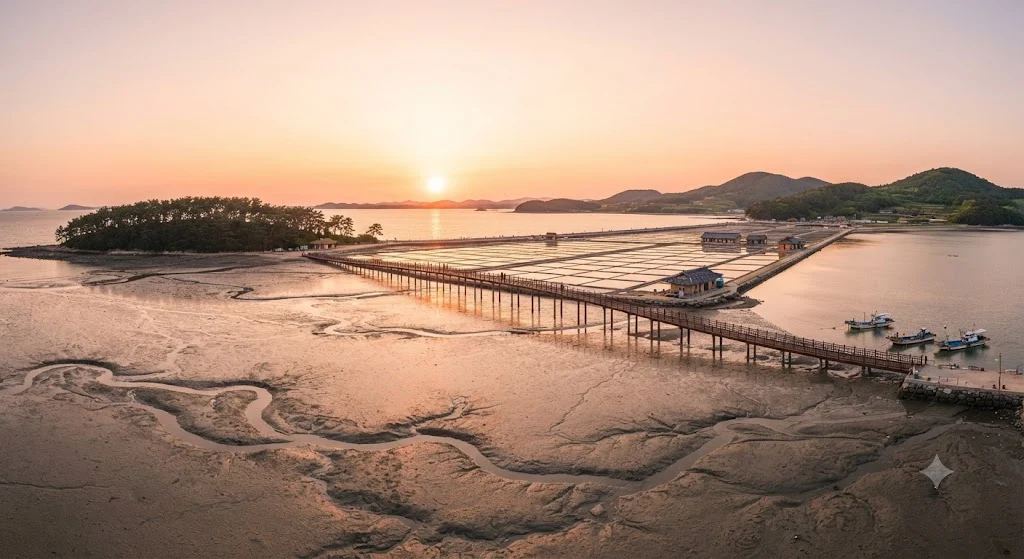
The island is home to Korea’s largest single salt farm, spanning a massive expanse of historic salt pans.
Walking along the coastal trails lets you experience the unpolluted natural beauty and pristine white sands of Ujeon Beach.
Make sure to visit the Salt Museum and catch the panoramic view from the salt field observatory.
Cultural Spots and Hidden Viewpoints
Beyond the beaches, the region holds deep ecological and cultural roots.
Quiet wooden bridges and scenic pine forests tell stories of a peaceful, unhurried lifestyle.
- Jjangttungeodari Bridge: A 470-meter wooden bridge stretching across the tidal mudflat, perfect for observing marine life.
- Sangjeongbong Peak: Offers the best panoramic view of the entire island and the unique peninsula-shaped pine forest.
Frequently Asked Questions (FAQ)
Q: How do I get to South Korea Jeungdo from the mainland?
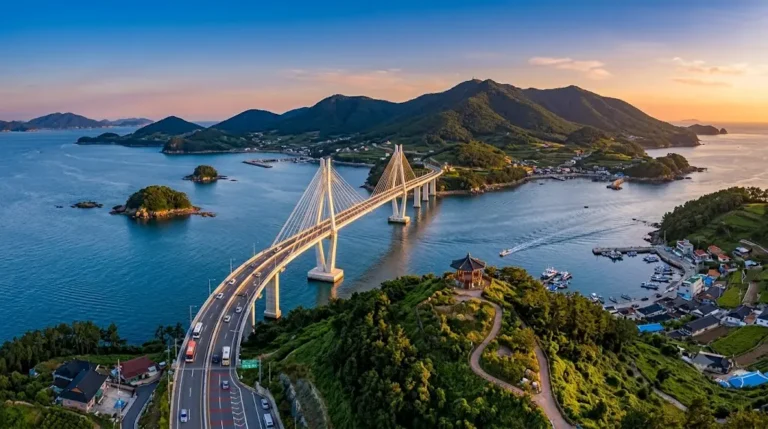
- A: You can drive or take an express bus passing through Muan, Jido-eup, and across the Jeungdo Bridge connecting the islands directly.
Q: Is English widely spoken in the area?
- A: English signage is limited outside major attractions like the Salt Museum. It is recommended to save offline translation apps and key destination names in Korean characters.
Q: What should I pack for a trip to South Korea Jeungdo?
- A: Essential items include:
- Comfortable walking shoes for tidal flats and coastal pine forest trails
- Sun protection (hat, sunglasses, and high-SPF sunscreen)
- Cash for small local convenience stores and roadside food vendors
Q: Are there good dining options for vegetarian travelers?
- A: Traditional Korean side dishes (banchan) are abundant, but seafood broths are common in local soups. Informing your server about dietary preferences using a translated card helps.
Q: Can I explore South Korea Jeungdo without a car?
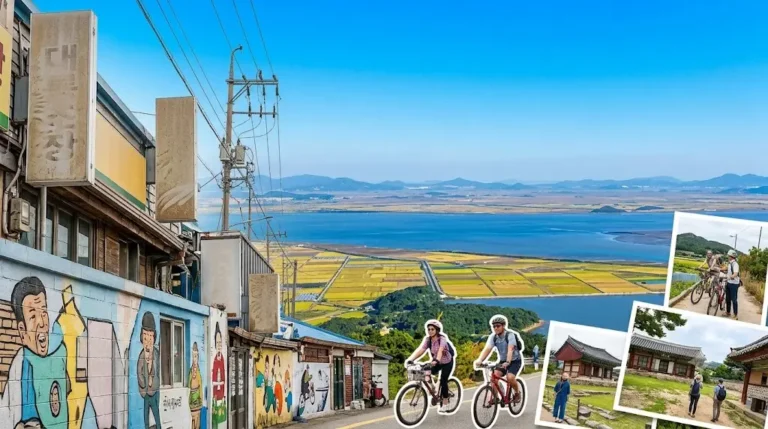
- A: Yes, though buses run infrequently; many travelers prefer renting bicycles to leisurely explore the flat, scenic slow-city roads.
Conclusion
Mastering your South Korea Jeungdo trip comes down to three key takeaways:
- Check local tide schedules before attempting to cross tidal roads like the Hwado Nodugil.
- Pace yourself along the slow-city trails by dedicating time to explore Taepyeong Salt Farm and Ujeon Beach.
- Keep offline maps and translated addresses handy to navigate rural connectivity gaps seamlessly.
Take action today by planning your driving route and securing your island accommodation to experience the authentic beauty of this slow-city destination!
🔗 You Might Also Like
South Korea Imjado Travel Guide: Discovering the Hidden Diamond Island
South Korea Cheongsando Travel Guide: Discovering the Slow City Masterpiece