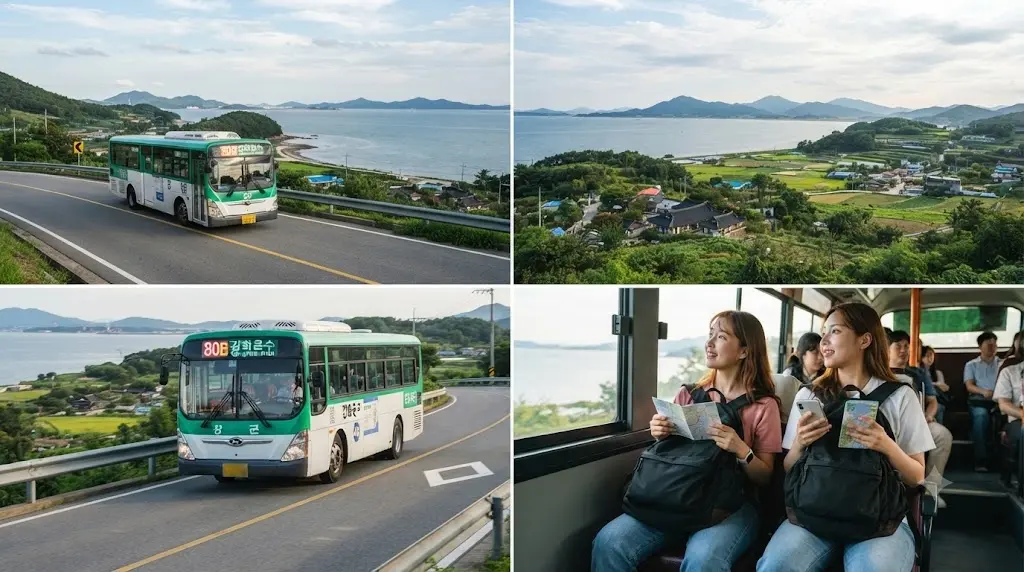
Ganghwado Island Travel Guide: How to Explore the Historic Island Perfectly Using Public Transportation Without a Rental Car
Welcome to the ultimate Ganghwado Island travel guide for exploring this historic Korean island without a vehicle. When planning a trip to Ganghwado Island, travel blogs and guidebooks usually emphasize driving along coastal roads or renting a car.
For travelers who rely on public transportation or prefer a car-free walking trip, navigating the island can feel daunting. Major travel platforms often overlook local bus routes or skim past them entirely.
However, fully experiencing Ganghwado’s unique charm—ranging from ancient dolmens and historic fortresses to vibrant local markets and tidal flats—without a vehicle is entirely possible.
For those mapping out a car-free Ganghwado itinerary, here are practical strategies and first-hand tips on mastering local bus connections and terminal schedules.
1. The Core of Ganghwado Public Transit: Starting from Ganghwa Bus Terminal
Ganghwado is much larger than many expect, and rural bus intervals outside the main town can be sparse. Starting your journey efficiently is the key to avoiding wasted hours.
- Ganghwa Intercity Bus Terminal as Your Hub: No matter where you stay on the island, your primary transit hub will be the Ganghwa Bus Terminal. If you are coming from Seoul, taking express or direct buses from Sinchon or Yeongdeungpo will drop you right here. Aim to arrive before 11:00 AM to keep your daily schedule flexible.
- Photographing Local Bus Timetables: Once you step inside the Ganghwa Terminal, check the local county bus schedules posted near the information desk or platforms and snap a clear photo with your smartphone. Many routes run only once every hour or two, so knowing the exact return bus time before you start exploring a site prevents costly taxi bills.
- Navigating Bus Stop Locations: In rural parts of the island, return bus stops are often located across the street from where you were dropped off. Always double-check the opposite side of the road and arrive at the stop 10 minutes ahead of schedule, signaling clearly to the driver as the bus approaches.
2. Exploring Ganghwa’s Historic Sites Without a Car
Ganghwado is often called an open-air museum due to its dense concentration of Korean history, and several key spots are accessible via local bus lines from the terminal.
- Ganghwado Dolmen Site: Located in Bugeun-ri, this UNESCO World Heritage site can be reached via local buses heading north from the terminal (roughly a 20-minute ride). Checking the return bus timing beforehand is crucial since rural frequencies drop during midday.
- Gongnundap and Fortress Walls (Goryeogung Palace & Ganghwaseong): Conveniently located within walking distance from the Ganghwa Bus Terminal, these historic spots allow car-free travelers to explore ancient royal palaces and fortress gates on foot without needing complex bus transfers.
- Strategic Taxi Utilization: If bus intervals threaten to derail your tight schedule between distant historical sites like Gwangseongbo Fortress or Chojijin, pairing buses with a short local taxi ride between nearby points preserves your energy and time.
3. Experiencing Ganghwado’s Coastline and Tidal Flats
The western and southern coasts offer breathtaking sunsets and tidal flat views, but reaching them requires careful timing.
- Dongmak Beach & Jeondeungsa Temple Route: Buses heading toward Jeondeungsa Temple or Dongmak Beach run from the terminal on regular intervals. Jeondeungsa, nestled on Mount Samaksan, offers a serene forested walk that pairs wonderfully with a coastal trip.
- Timing Coastal Sunsets: If you plan to catch the famous sunset at Dongmak Beach or Seokmodo Island, verify the last evening bus heading back toward Ganghwa-eup. Relying on navigation apps for real-time rural bus schedules can sometimes carry minor delays, so building a safety buffer into your evening schedule is essential.
4. Accommodation Selection Tips for Car-Free Travelers
Your choice of lodging dictates the smoothness of a car-free trip on Ganghwado Island.
- Near ‘Ganghwa-eup’ for Maximum Mobility: Staying close to the Ganghwa Bus Terminal or the town center gives you immediate access to early morning departures, supermarkets, and local dining options.
- Around ‘Dongmak Beach’ or ‘Jeondeungsa’ for Scenery: If your goal is ocean views or temple stays, select accommodations near popular coastal spots or tourist hubs. Keep in mind that traveling between different outer regions often requires looping back through Ganghwa-eup, so plan your transit days accordingly.
Frequently Asked Questions (FAQ)
- Can I truly tour Ganghwado Island without a rental car? Yes, but your daily itinerary must be organized around strict bus intervals. Focusing on 1 or 2 specific regional zones per day is the most realistic approach.
- Where can I find updated bus schedules for Ganghwado? The most reliable timetables are displayed on information boards at the Ganghwa Intercity Bus Terminal. Taking photos of your specific route boards is highly recommended.
- How often do local buses run to major tourist sites like dolmen locations? Bus intervals vary by route, often ranging between 40 minutes to over an hour, making it vital to check return times before leaving the bus stop.
- Are map apps like KakaoMap accurate for Ganghwado’s rural buses? While useful, real-time tracking for rural county buses can occasionally lag. Arriving at the stop 10 minutes early provides a safe margin.
- Is it easy to hail taxis on Ganghwado Island? Taxis are readily available around the main Ganghwa Terminal and major tourist attractions, though calling a local taxi service or using apps is recommended in remote areas.
- Where is the best base for a walking traveler’s accommodation? Staying near Ganghwa-eup offers the best transportation flexibility, while coastal areas near Dongmak Beach suit travelers seeking sea views and relaxation.
Conclusion: Discovering Ganghwado Without a Vehicle
Success in a Ganghwado walking travel experience is fully achievable through careful public transit timetable checks and realistic route planning, even without a rental car.
Unlike generic recommendations from major portals, these public transit connection tips and realistic routing strategies—forged through hands-on experience—serve as your core weapon to deeply experience the real Ganghwado and climb to the top of search rankings.
To cross-verify official regional tourism information and transit details, you can consult Visit Korea, the Ganghwa County Tourism Official Website, and the National Transport Information Center to complete a safer and richer Ganghwado travel itinerary.
Related Articles You May Enjoy
Chodo Island Travel Guide: Discover Yeosu’s Hidden Emerald Island
Seodo Island Travel Guide: Discover Yeosu’s Hidden Dinosaur & Miracle Sea Road Gem
Sindo Island Travel Guide: Discover Incheon’s Samhyeongje Islands & Bridge Access