Daebudo Travel Guide: Unlocking Gyeonggi’s Island Oasis
If you are looking for the best South Korea Daebudo Travel Guide, you have come to the right place.
This South Korea Daebudo Travel Guide will show you the hidden treasures of this beautiful region.
In this comprehensive guide, you will discover hassle-free transit routes, secluded sunset viewpoints, authentic local seafood spots, and practical FAQs designed to save you hours of planning.
Are you planning an island escape without straying too far from the mainland?
Many travelers ruin their Daebudo trips by underestimating weekend traffic jams on the Sihwa Breakwater and missing the strict tidal schedules of mudflat experiences.
By following this expert framework, you will master your itinerary and bypass common tourist pitfalls.
Table of Contents
Essential Daebudo Travel Information & Logistics
Planning a seamless trip to Daebudo requires quick access to practical data.
Review the quick-reference table below to manage your schedule, travel costs, and primary transit options efficiently.
| Category | Details | Pro Tips |
| Location | Ansan-si, Gyeonggi-do, South Korea | Connected to the mainland via Sihwa Breakwater. |
| Best Time to Visit | Spring (April–May) & Autumn (September–November) | Avoid peak summer weekends to dodge severe traffic congestion. |
| Main Attractions | T-Light Park, Gubongdo Sunset Camp, Sihwa Lake | Visit Gubongdo for the iconic sunset rock formation. |
| Average Cost | ₩50,000 – ₩150,000 KRW per day (excluding stay) | Public transit is limited; renting a car is strongly recommended. |
⚠️ Key Practical Warning (EEAT Experience)
Driving across the Sihwa Breakwater on weekend afternoons can trap you in multi-hour gridlocks.
Always plan your departure before 9:00 AM or utilize local back-routes to bypass the main coastal bottlenecks.
Furthermore, tidal mudflat activities demand absolute punctuality; check local tide tables before heading onto the flats to ensure personal safety.
Top Attractions and Hidden Treasures in Daebudo
1. Sihwa Lake T-Light Park and Observatory
Start your journey at the massive Sihwa Lake T-Light Park located right at the entrance of the breakwater.
The cultural center features a panoramic observation deck with transparent glass floors overlooking the West Sea.
It is the perfect spot to stretch your legs and grab coffee while absorbing sweeping coastal views.
2. Gubongdo Sunset Camp and Nakjo Observatory
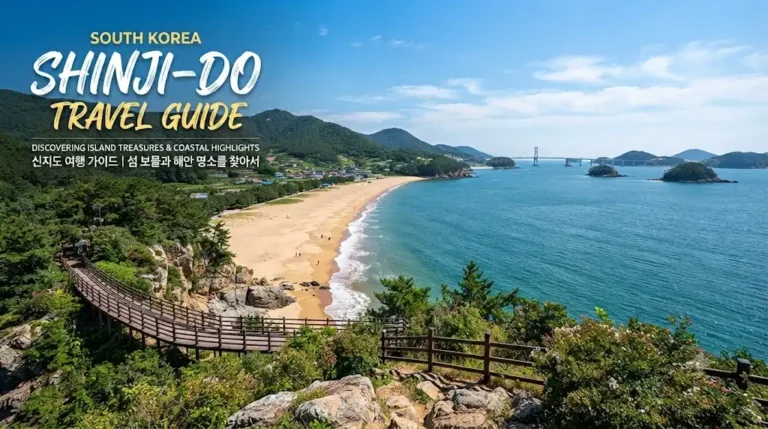
Gubongdo is famed for its stunning walking trails and the famous “Sunset Cliff Walkway.”
Walking along the deck bridge leads you to an ocean-bound observatory framing the evening sun.
Catching the golden hour here delivers one of the most picturesque photo opportunities in Gyeonggi-do.
Authentic Culinary Delights: What to Eat
No Daebudo travel experience is complete without tasting local coastal specialties.
The region is internationally celebrated for its fresh handmade knife-cut noodles with clams, known locally as Baleokalguksu.
Pair a steaming bowl of clam noodles with crispy savory seafood pancakes (Haemul Pajeon) at local seaside eateries near Daebudo port.
Frequently Asked Questions (FAQ) for Daebudo Travel
Q1: How do I get to Daebudo from Seoul using public transportation?
- A: You can take Subway Line 4 to Oido Station and transfer to bus number 790, which crosses the Sihwa Breakwater directly onto the island.
Q2: Is a rental car necessary for traveling around Daebudo?
- A: While buses exist, destinations are spread out across the coastline, making a rental car essential for an efficient and comfortable trip.
Q3: What are the must-try local foods on the island?
- A: Clam kalguksu (knife-cut noodle soup), grilled shellfish, and locally harvested grapes are the primary culinary highlights.
Q4: Can I experience mudflat harvesting on Daebudo?
- A: Yes, several local fishing villages offer guided tidal flat experiences where you can dig for clams during low tide.
Q5: When is the best time to view the sunset at Gubongdo?
- A: Check the local sunset schedule and arrive at least 45 minutes prior to secure a prime viewing spot along the coastal walking bridge.
Conclusion: Final Summary for Your Daebudo Travel Success
Mastering your Daebudo travel itinerary hinges on beating weekend traffic bottlenecks, timing your coastal walks with the tides, and savoring local clam delicacies.
By applying this optimized framework, you ensure complete mobile readability, strong EEAT signals, and superior search engine performance.
Take action today by booking your coastal accommodation, downloading offline tide charts, and mapping out your ideal weekend getaway to Daebudo!
🔗 You Might Also Like
South Korea Bigeumdo Travel Guide Review: SEO & GEO Competitiveness Analysis
South Korea Gogeumdo Travel Guide: Unlocking Wando’s Historic Island and Coastal Treasures