Jindo Island Travel Guide: Escape to South Korea’s Mystical Island Paradise
Imagine standing on the edge of the Korean peninsula where the sea literally splits open to reveal a hidden pathway beneath the waves. Missing out on Jindo means missing one of the most breathtaking natural phenomena on Earth, along with a rich cultural heritage that remains untouched by commercial tourism.
Whether you are chasing the legendary “Moses Miracle” or seeking a serene coastal retreat, this comprehensive Jindo Island Travel Guide is your ultimate roadmap to exploring South Korea’s third-largest island.
Table of Contents
Jindo Island Travel Guide: Driving Access & Local Transportation
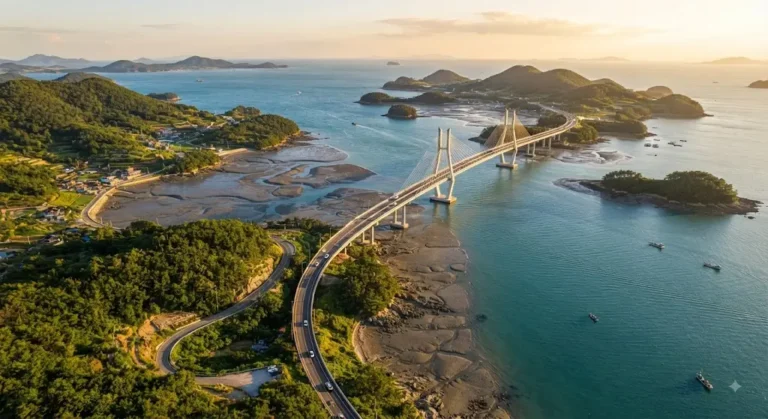
Getting to Jindo Island has never been easier thanks to the Jindo Bridge, which connects the mainland directly to the island. While there is no direct KTX train station on the island itself, a combination of high-speed rail and local transport makes it highly accessible.
Below is a quick overview of how to reach Jindo Island from Seoul:
| Transportation Type | Route Details | Estimated Time | Key Notes |
| By Car (Driving) | Seoul $\rightarrow$ West Coast Expressway $\rightarrow$ Jindo Bridge | ~4.5 to 5 Hours | Best choice for flexible island exploration. |
| KTX + Rental Car | Seoul Yongsan Station $\rightarrow$ Mokpo Station $\rightarrow$ Drive to Jindo | ~2.5 Hours (KTX) + 1 Hour (Drive) | Fastest option; rent a car at Mokpo Station. |
| Express Bus | Central City Terminal (Seoul) $\rightarrow$ Jindo Bus Terminal | ~5 Hours | Direct route, budget-friendly but less flexible. |
⚠️ Key Practical Warning (EEAT Experience)
Watch the Tides and the Wind: Jindo is famous for the Myeongnyang Strait, which features some of the strongest, most turbulent tidal currents in Asia. If you plan to visit coastal shores or walk the sea parting pathway, you must check the daily tide timetable (Multtae) via the Korea Hydrographic and Oceanographic Agency. Arriving even 20 minutes late can lead to dangerous situations as the water rushes back at incredible speeds. Furthermore, the Jindo Bridge can experience heavy crosswinds during typhoon seasons—keep both hands on the wheel!
Best Itinerary: Top Attractions in this Jindo Island Travel Guide
To fully experience the magic of Jindo, you need an itinerary that captures its natural wonders and deep historical roots. Here are the top three must-visit locations:
1. Jindo Mysterious Sea Road (Mysterious Sea Route – 신비의 바닥길)
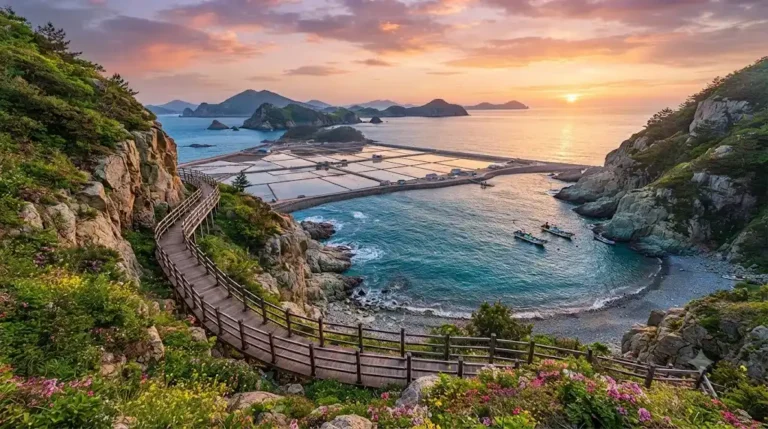
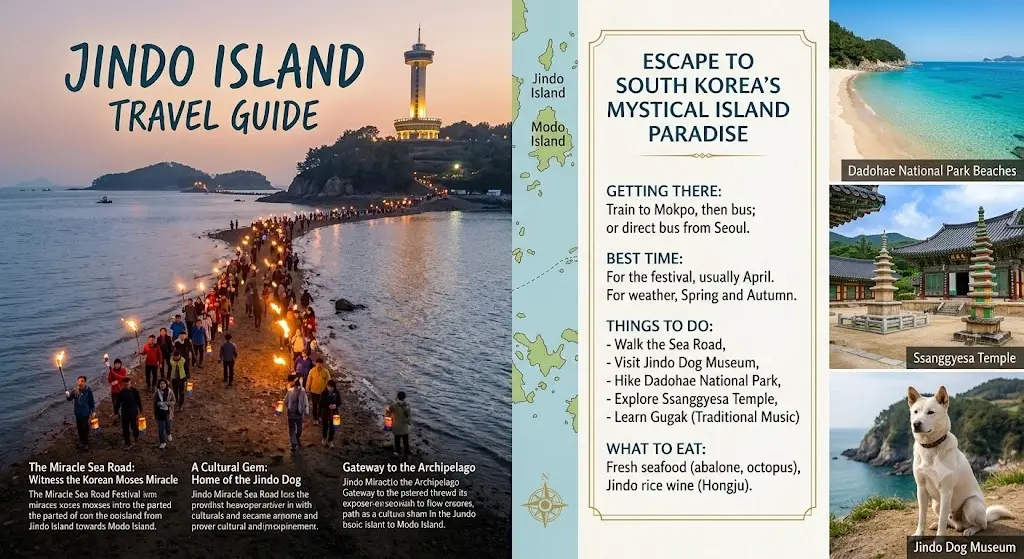
This is the crown jewel of Jindo. Once or twice a year (typically during spring tides), the sea parts due to extreme tidal differences, revealing a 2.8-kilometer-long, 40-meter-wide path connecting the main island to Modo Island. Even if you visit outside the official festival dates, the dedicated theme park and coastal walking trails offer stunning, panoramic oceanic views.
2. Ullimsanbang House (운림산방)
Nestled at the foot of Cheomchalsan Mountain, Ullimsanbang is the historic estate and atelier of the famous Joseon Dynasty painter Heo Ryeon. The traditional Korean hanok buildings surrounded by a pristine, mirror-like lotus pond create a serene atmosphere. It is widely considered the birthplace of late Joseon Southern School painting.
3. Jindo Tower (진도타워)
Located right next to the Jindo Bridge, this architectural marvel offers a bird’s-eye view of the historic Myeongnyang Strait—the legendary battle site where Admiral Yi Sun-sin defeated a massive invading fleet with just 13 ships. The observation deck provides a stunning 360-degree view of the surrounding archipelago, especially at sunset.
Local Food: Authentic Flavors in Jindo Island Travel Guide
Jindo’s unique geography yields incredible culinary treasures from both land and sea. Do not leave the island without trying these three authentic local specialties:
- Jindo Hongju (진도 홍주): A striking, ruby-red traditional liquor crafted with local grain and distilled through Gromwell (Gichi) roots. Packing an ABV of around 40%, it is famously smooth with a subtly herbal, medicinal finish.
- Fresh Grilled Abalone (Jeonbok-gui – 전복구이): Cultivated in the clean, fast-moving coastal waters of the archipelago, Jindo abalones are exceptionally firm and sweet. Enjoy them freshly sliced as sashimi or grilled over charcoal with a brush of local sesame oil.
- Jindo Sea Mustard (Miyeok – 미역): Grown in the wild, turbulent currents around the island, Jindo’s natural sea mustard is thick, nutrient-dense, and highly prized across South Korea. A hot bowl of Jindo Miyeok-guk (seaweed soup) offers an intensely deep flavor profile unlike any commercial variety.
Google-Optimized FAQ Section for Jindo Island Travel Guide
Q1: When is the best time to visit Jindo Island?
A1: The absolute best time to visit is during the spring (typically between March and May) to witness the world-famous Jindo Mysterious Sea Parting Festival. Autumn (October to November) is also excellent for mild hiking weather and clear skies.
Q2: How do I check the sea parting schedule?
A2: The sea parting relies heavily on tidal movements. You should check the official Jindo County Tourism website or the Korea Hydrographic and Oceanographic Agency schedules prior to booking your trip.
Q3: Is it possible to travel around Jindo Island using public buses?
A3: While local buses run from the Jindo Bus Terminal to major spots like Ullimsanbang, buses are infrequent. Renting a car or booking a taxi tour is highly recommended for an efficient and stress-free trip.
Q4: What is the significance of the Jindo Dog?
A4: The Jindo Dog (Jindogae) is South Korea’s National Monument No. 53. Indigenous to the island, they are celebrated globally for their unmatched loyalty, intelligence, and pristine nature. You can visit the Jindo Dog Theme Park to see them in person.
Q5: Are there good accommodation options on Jindo Island?
A5: Yes, Jindo offers a wide range of stay options, from luxury ocean-front resorts like Sol Beach Jindo to charming, traditional Korean pensions (minbak) closer to the historical cultural sites.
Q6: How many days are recommended for a complete Jindo itinerary?
A6: A 2-day, 1-night itinerary is perfect to cover the major highlights including Jindo Tower, Ullimsanbang, and a coastal sunset tour without feeling rushed.
🔗 You Might Also Like
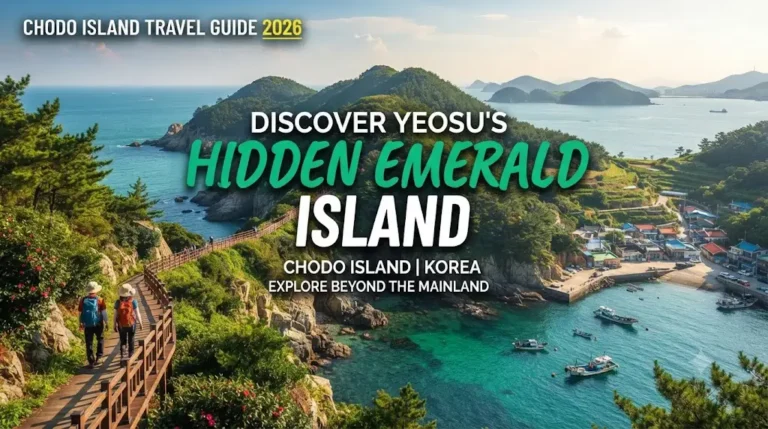
Chodo Island Travel Guide: Discover Yeosu’s Hidden Emerald Island
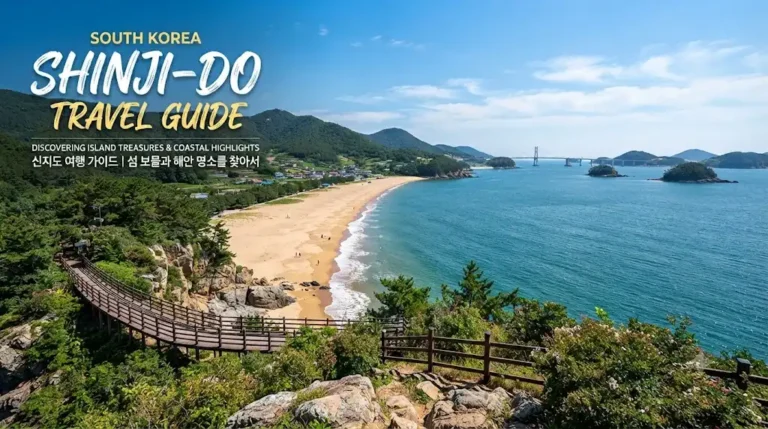
Sindo Island Travel Guide: Discover Incheon’s Samhyeongje Islands & Bridge Access