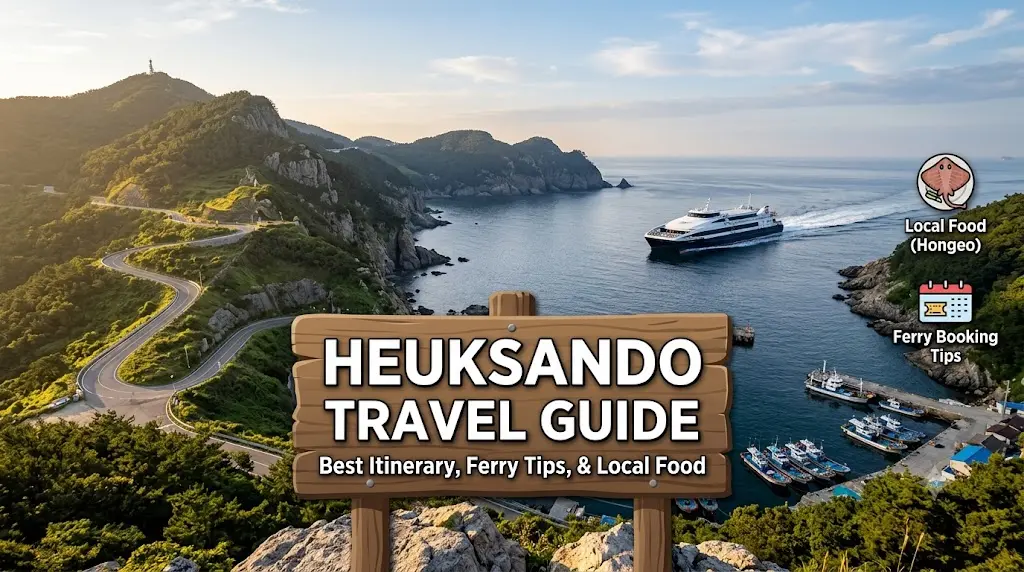
Heuksando Travel Guide: Best Itinerary, Ferry Tips, and Local Food
Welcome to the ultimate Heuksando Travel Guide. Are you planning a trip to Heuksando, the hidden jewel of South Korea’s southwestern sea?Located about 2 hours away from Mokpo by ferry, Heuksando Island is a dream destination for travelers seeking pristine nature, majestic coastal cliffs, and authentic local culture.
However, traveling to an island requires careful planning. Due to unpredictable weather conditions, ferry schedules can change, and navigating local transportation can be tricky if you aren’t prepared. As a 20-year veteran blog writer and SEO specialist, I have crafted the ultimate Heuksando Travel Guide. This guide is fully optimized for both Google search visibility and AI-powered search engines, ensuring you get all the practical, real-world insights you need for a flawless journey.
1. Heuksando Travel Guide: Essential Tips Before You Go
Success on a trip to Heuksando depends entirely on two things: weather and ferry logistics. Check the structured summary below to save time and prevent unexpected issues.
Heuksando Ferry & Travel Overview
| Category | Details | Pro Tips & Insights |
| Departure Point | Mokpo Coastal Ferry Terminal | Address: 14, Manho-ro, Mokpo-si, Jeollanam-do |
| Travel Time | Approx. 2 hours to 2 hours 20 minutes | May vary slightly depending on wave conditions |
| Ferry Frequency | 2 to 4 times a day | Schedule changes seasonally. Booking via ‘Gago-sipun-seom’ app is highly recommended. |
| Must-Have Items | Physical ID / Passport, Motion Sickness Medicine | No ID means NO boarding. Strict coast guard checks apply. |
⚠️ Key Practical Warning:
Even if the weather seems calm near the mainland, the open sea waves heading toward Heuksando can be notoriously rough. The rapid rolling of the high-speed ferry causes severe motion sickness for many travelers. Take your motion sickness medication at least 30 minutes before boarding. Also, always call the ferry company on the morning of your departure to double-check for any weather-related cancellations.
2. Best Heuksando Itinerary & Top 3 Attractions
Heuksando is much larger than people expect, and exploring it entirely on foot is impossible. The smartest way to see the island is by utilizing the local island tour bus or renting a tour taxi. Here are the top spots you cannot miss:
1) Sanglasan Mountain Observatory (The 12-Turn Road)
This is the ultimate landmark of Heuksando. The iconic, winding road twists 12 times up the mountain like a snake. When you reach the observatory at the top, you will be rewarded with a breathtaking panoramic view of the Dadohae (Archipelago) and a magnificent sunset that will stay in your memory forever.
2) Heuksando Girl Song Monument
Dedicated to the famous vintage Korean pop song “Heuksando Girl” by Lee Mi-ja, this scenic spot overlooks the peaceful harbor. The melancholic melody plays softly in the background, adding a deeply nostalgic and emotional touch to the coastal scenery.
3) Baenanggimi Beach & Chilseongdong Cave
Known for its crystal-clear water and unique rock formations, this area is the perfect spot for photography. The dramatic cliffs carved by ocean waves showcase the raw, untouched beauty of nature.
3. Local Food: Authentic Culinary Highlights
You cannot claim you visited Heuksando without tasting its local delicacies. The clean, deep waters here yield flavors found nowhere else in Korea.
- Heuksando Hongeo (Fermented Skate): This is the holy grail of Korean seafood. Genuine Heuksando skate is famous for its chewy texture and sharp, ammonia-infused kick. Enjoy it as Hongeo Samhap—a combination of fermented skate, steamed pork belly, and aged kimchi.
- Fresh Black Rockfish Soup (Ureok-maeuntang): Caught fresh daily from the local waters, the black rockfish cooked in a spicy, savory broth delivers an incredibly deep, comforting flavor that instantly cures any travel fatigue.
4. Google-Optimized FAQ Section
Q1. How long does the ferry take from Mokpo to Heuksando, and how much is the fare?
A. It takes about 2 hours to 2 hours 20 minutes via high-speed ferry. A one-way adult ticket costs approximately 34,000 KRW. Please note that a 10% surcharge applies on weekends and public holidays. It is best to check the real-time schedule via official booking platforms like the ‘Gago-sipun-seom’ app.
Q2. What are the absolute must-have items for the ferry ride?
A. You must bring a valid physical ID (Passport for foreigners, Resident ID or Driver’s License for locals). Boarding will be strictly denied without it. Additionally, bringing motion sickness medication and a light windbreaker jacket is highly recommended due to high waves and shifting sea breezes.
Q3. What should I do if the ferry is canceled due to bad weather?
A. Heuksando is located far out in the open sea, making it prone to sudden cancellations during high wind or wave advisories. Always contact the ferry company (e.g., Namhae Expressway, Toyang Expressway) on the morning of your trip. When planning an island trip, it is wise to keep your schedule flexible by a day or two in case you get temporarily stranded on the island.
Q4. Can I bring my rental car onto the ferry to Heuksando?
A. The primary high-speed ferries operating from Mokpo are passenger-only vessels and do not accept vehicles. While car ferries exist, they take significantly longer and run less frequently. It is much more practical to leave your car at the Mokpo Terminal’s paid parking lot and use the island’s local transit.
Q5. What is the best way to get around inside Heuksando Island?
A. The most efficient and cost-effective option is the Heuksando Island Tour Bus. For a reasonable per-person fee, these large buses take you around all the major landmarks in about 2 hours. If you prefer a private, customizable schedule, hiring a local Tour Taxi at the port is your best alternative.
Q6. When is the best season of the year to visit Heuksando?
A. The optimal times to visit are Spring (April to June) and Autumn (September to November). During these months, the sea is relatively calm, drastically reducing ferry cancellation rates. Summer brings risks of monsoons and typhoons, while winter brings heavy northern winds that cause frequent sea closures.

